

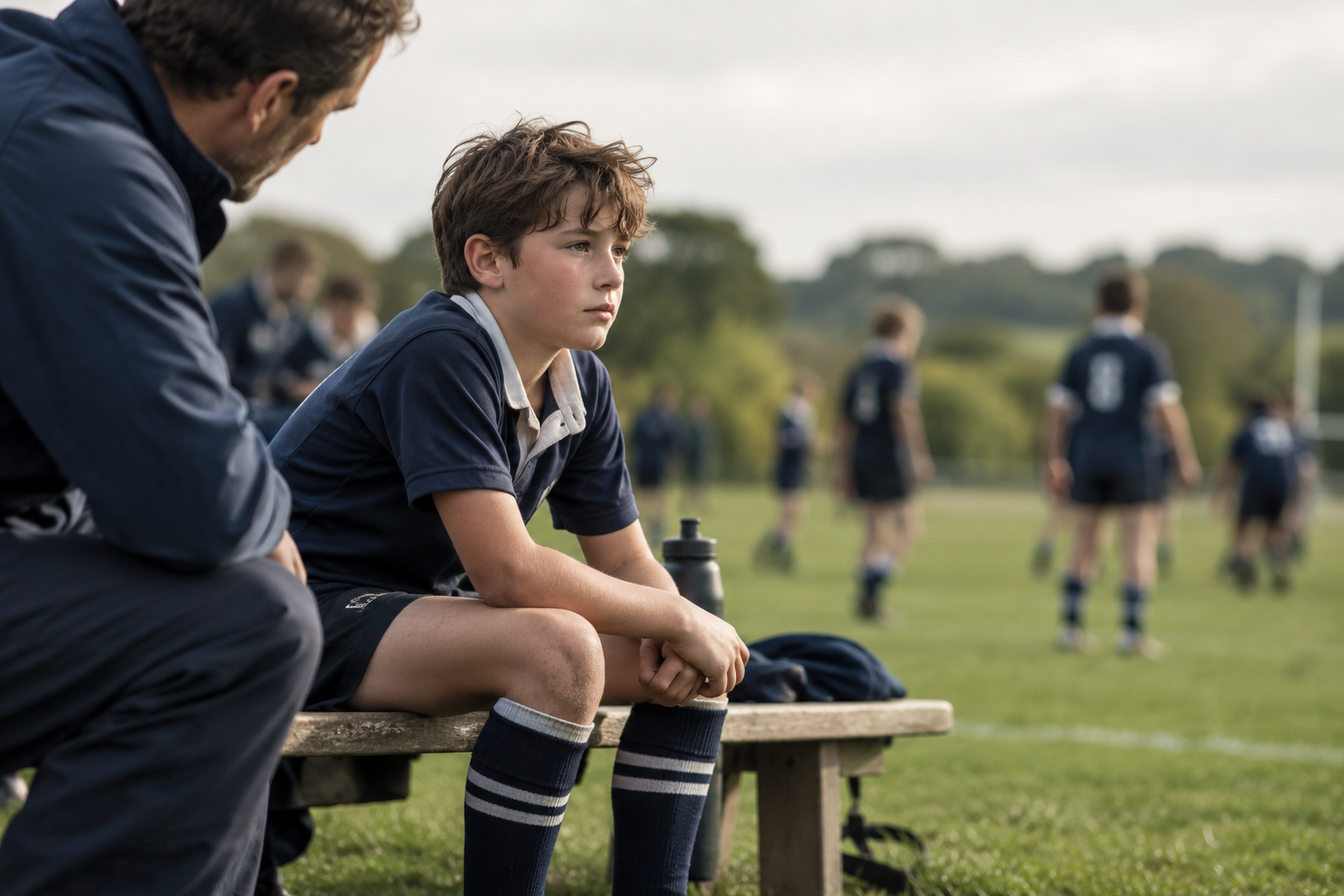
As the summer comes to an end and scrum caps and hockey sticks are dusted off, we unfortunately tend to see an increase in head injuries and suspected concussions. Whether they happen during rugby, football, hockey or another activity, these incidents can understandably be worrying for both parents and children.
Knowing how to recognise the signs of concussion – and what to do next – is important.
What is a concussion?
A concussion is a temporary injury to the brain caused by a blow or jolt to the head or body. It does not necessarily require a direct blow to the head – a sudden acceleration or deceleration of the head can also cause a concussion.
Symptoms can sometimes be obvious, such as loss of consciousness, headache, confusion, slurred speech or problems with balance. However, they can also be much more subtle and may include dizziness, ringing in the ears, feeling dazed, difficulty concentrating or simply not feeling quite right.
Importantly, a child does not need to lose consciousness to have sustained a concussion.
What should I, or a teacher or coach, do if we suspect concussion?
The child should be removed from play immediately and should not return to sport that day.
If there has been a head injury and you notice any symptoms that could indicate concussion – even if they seem relatively mild or short-lived – it is safest to treat it as a suspected concussion.
The guidance used across grassroots sport is simple: ‘If in doubt, sit them out.’
What might happen if they keep playing?
It is important that a child with suspected concussion does not continue playing. While serious complications are rare, sustaining another head injury before the brain has had time to recover can have serious consequences and may prolong recovery.
This is why concussion should never be treated as something to simply ‘play through’. If concussion is suspected, the child should be removed from play and assessed appropriately before beginning a gradual return to activity.
My child did not lose consciousness. Does that mean it wasn’t a concussion?
No. Loss of consciousness is not required for a diagnosis of concussion, and many children who sustain a concussion are never knocked out.
It is therefore important to look at the full range of symptoms following a head injury rather than using loss of consciousness as an indication of whether or not the injury is significant.
Does my child need medical attention?
If you suspect your child has sustained a concussion, they should be assessed appropriately. Often, the safest option is to have an urgent review with a suitably qualified doctor. Some schools will have one on site on matchdays.
Current UK grassroots concussion guidance recommends contacting NHS 111 within 24 hours of a suspected concussion if an appropriate healthcare professional is not available to assess them.
Some symptoms following a head injury require more urgent medical attention. Seek emergency help if your child has symptoms such as difficulty staying awake, a seizure, weakness or numbness, problems with walking, balance, understanding or speaking, or other signs of a potentially serious head injury.
If you are unsure what to do, NHS 111 can advise you on the most appropriate care. Alternatively, please contact us, and we can arrange an urgent assessment where appropriate.
What is the treatment?
For the first 24–48 hours following a concussion, the focus should be on relative physical and cognitive rest. This means allowing plenty of rest and sleep and limiting activities that make symptoms worse, including screen time.
After this initial period, normal daily activities can be gradually reintroduced as symptoms allow. This might begin with a gentle walk or a short period of reading or screen time before gradually increasing activity.
The key is to take recovery step by step. If an activity significantly worsens symptoms, reduce or stop it and allow further time to recover before trying again.
When can they go back to school?
Returning to school should also be gradual and guided by your child’s symptoms. They may need some time away from school initially before returning for shorter periods or with adjustments to their normal school day.
Every child recovers differently, so communication between parents, the school and healthcare professionals is important. Schools may also have their own concussion policies and return-to-learning procedures.
The priority should be a comfortable return to normal learning before progressing back towards full sporting activity.
When can they play sport again?
A child should not return straight to full sport following a concussion.
The Rugby Football Union, The Football Association and other sporting bodies provide clear guidance on a graduated return to activity and sport following concussion. This involves progressing through a series of stages, beginning with normal daily activities and education before gradually reintroducing exercise, training and, eventually, competitive sport.
It can feel like a long period away from full sport, particularly when a child feels well again, but allowing the brain sufficient time to recover is important. The return-to-sport process should not be rushed, even if symptoms appear to have resolved quickly.
What symptoms should I continue to look out for?
Thankfully, most children recover well from concussion, particularly when it is recognised early and their return to normal activities is managed appropriately.
Some children may experience symptoms for longer. These can include persistent headaches, dizziness, nausea, problems with coordination, difficulty concentrating or fatigue.
There can also be less obvious symptoms, particularly in adolescents and teenagers, such as changes in mood, irritability or difficulties at school. If these develop following a concussion, it is important to mention the previous head injury to your doctor.
If symptoms persist, we can review your child and, if necessary, arrange specialist assessment.
My child has had multiple concussions but seems well – what should I do?
A history of repeated concussion is important, even if your child appears to have recovered fully between injuries.
If your child has experienced several concussions, I would recommend a specialist assessment before continuing with contact sport. We can review their history and arrange an appropriate referral if needed.
Final thoughts
Concussion has historically sometimes been viewed as part and parcel of playing sport, but we now understand much more about the importance of recognising and managing it properly.
The reassuring news is that most children recover well. Recognising the signs early, removing them from play and allowing a safe, gradual return to school and sport can help support their recovery.
If you are concerned that your child may have sustained a concussion, or they are experiencing ongoing symptoms following a head injury, please get in touch.
At Sloane Street Surgery, we offer urgent private assessments for children and families – book online or call us on 0207 245 9333.
About the author

MBBS BSc (Hons) MSc MFSEM MRCGP
“It’s a rare privilege to be trusted with people’s lives — and here at Sloane Street Surgery, I’m grateful to have the time to truly get to know my patients and their needs.”
I enjoy all areas of general practice and the variety it brings, caring for patients of all ages and their families. I have a particular interest in musculoskeletal health, preventative medicine, and the role exercise can play in recovery and long-term wellbeing.