

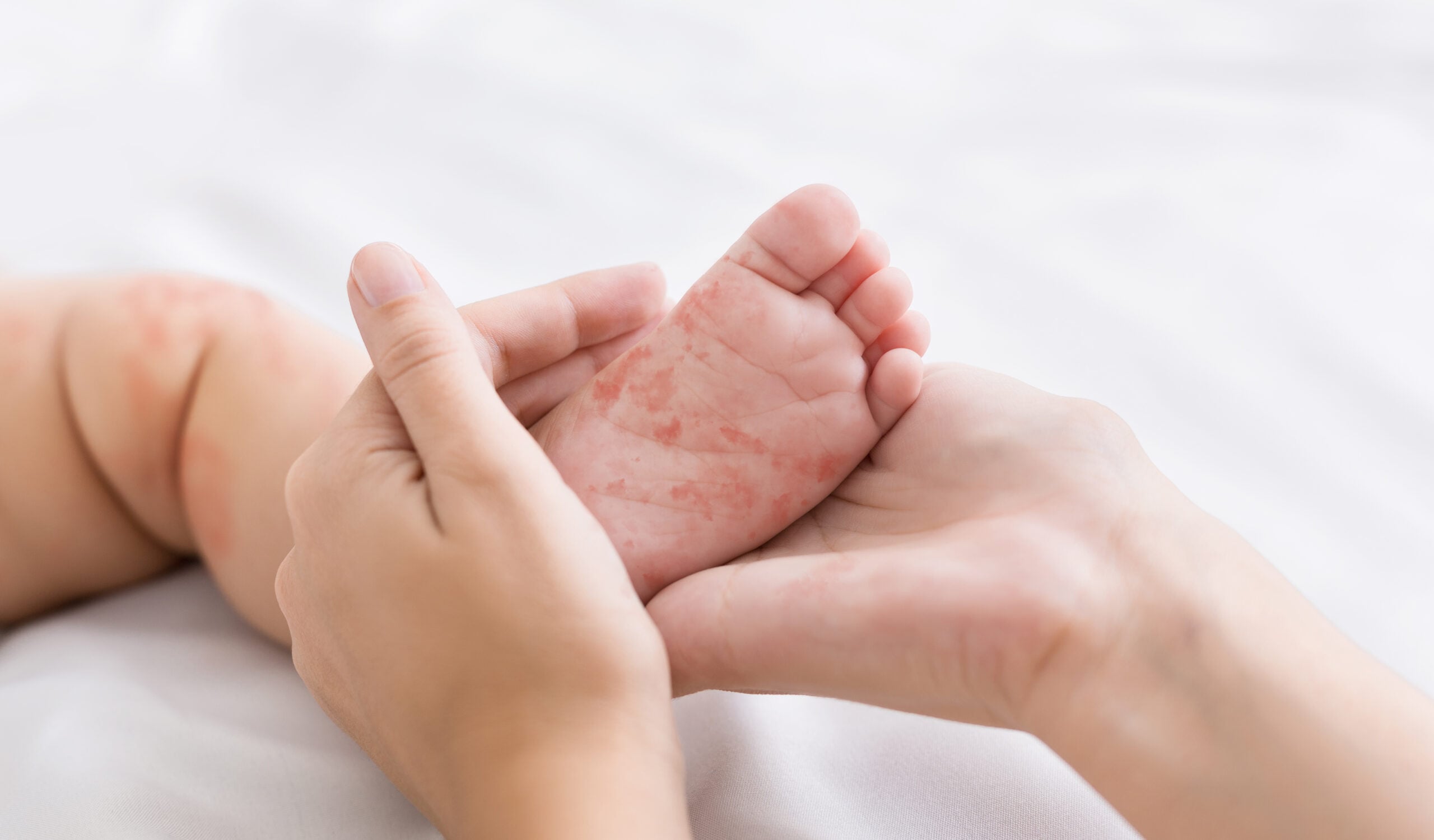
One of the most common questions we are asked by parents is, “What is this rash?”
While they can look very alarming, the good news is that most rashes in children are caused by common viral infections and settle on their own with a little time and supportive care. However, a small number can be a sign of a more serious illness and need urgent medical attention.
This guide explains some of the most common childhood rashes we see, what causes them, how they typically present, duration, and when you should contact us. While it’s impossible to diagnose every rash from appearance alone, I hope this overview helps you feel more confident about what to look out for.
Chickenpox
Chickenpox is caused by the varicella-zoster virus. It usually begins with a fever and feeling generally unwell, followed by an itchy rash that develops into fluid-filled blisters before crusting over. New spots often appear over several days; however, most children recover within 5-10 days. Treatment focuses on keeping your child comfortable with fluids, paracetamol and measures to reduce itching. It is the only rash where we need to avoid ibuprofen.
For the best way to help the itching, preventing risk of infection and scarring, follow these steps:
- Keep your child’s fingernails short and clean
- Dress them in loose-fitting cotton clothing
- Keep the bedroom cool, as heat can make itching worse.
- Encourage lukewarm baths rather than hot baths.
- Apply calamine lotion or cooling gels if they provide relief (although evidence is limited, many families find them soothing).
- Older children may benefit from an antihistamine if the itching is severe. Do check with us if unsure what dose to give.
Vaccine: We offer the chickenpox vaccine in a 2-dose schedule at 12 months and 18 months of age. Children can still get chickenpox following this; however, it tends to be a much milder version, so it’s worth having.
Contagious? Yes! Children are infectious from 1–2 days before the rash appears until all the blisters have crusted over, usually around 5 days after the rash begins. Very important for them to stay away from pregnant women, newborn babies and the immunosuppressed during this time.
Hand, Foot and Mouth Disease
Hand, foot and mouth disease is a common viral illness, usually caused by Coxsackievirus. Children tend to develop a mild fever followed by painful mouth ulcers and small blisters typically on the hands and feet. The illness usually settles within a week. Encourage plenty of fluids, Calpol, ibuprofen and topical numbing gels for the mouth.
Contagious? Yes, especially during the first week of illness and can spread to adults. The virus can remain in stool for several weeks after recovery, so good hand hygiene is important. Children do not necessarily need to stay off nursery or school if they are otherwise well enough to attend.
Scarlet Fever
We’ve seen outbreaks of Scarlet fever in recent years, caused by Group A Streptococcus bacteria. It often starts with a sore throat (bacterial tonsillitis) and fever, followed by a fine, rough “sandpaper” rash and a bright red or “strawberry” tongue. Antibiotics are needed to reduce complications and spread to others. The rash usually improves within a week.
Contagious? Without antibiotics, children remain infectious for around 2–3 weeks. Once they have been taking antibiotics for 24 hours and are feeling well, they can usually return to school or nursery.
Measles
Sadly, measles cases have been on the rise following a reduction in vaccination rates. It is a highly contagious viral infection that starts with a high fever, cough, runny nose and red eyes. A blotchy red rash usually begins on the face before spreading down the body. Small white spots inside the mouth may appear before the rash. Most children recover with rest and fluids, but complications such as pneumonia can occur.
The best protection for measles is having the vaccine (MMR) at ages 12 months and 3 years, 4 months. Two doses give them 99% protection against it.
Contagious? Children are infectious from around 4 days before the rash appears until 4 days afterwards. They should stay away from school or nursery for at least 4 days after the rash develops.
Roseola
Roseola is caused by human herpesvirus 6. Slightly different from the other viruses in that the pink rash tends to appear once the fever has settled. Although the high temperature can be worrying, many children are otherwise well when the rash appears. Like with the other viruses supportive treatment to treat the temperature is the key.
Contagious? The virus is spread mainly before the rash appears, while the child has a fever. Once the rash develops and the child is otherwise well, they are generally no longer considered highly infectious.
Slapped Cheek Syndrome (Fifth Disease)
Slapped cheek syndrome is caused by parvovirus B19. Children often develop bright red cheeks followed by a lacy pink rash on the arms and body. They usually have only mild cold-like symptoms and recover without treatment. The rash may come and go for several weeks, especially after exercise or a warm bath.
Contagious? Yes before the rash appears. Once the characteristic rash develops, they are usually no longer infectious and can attend school if they feel well. Try to stay away from pregnant women and immunosuppressed.
Impetigo
Impetigo is a common bacterial skin infection caused by Staphylococcus aureus or Group A Streptococcus. It causes red sores that develop distinctive honey-coloured crusts, usually around the nose and mouth. It responds very well to antibiotic creams and tablets if needed.
Contagious? Very contagious through close contact. Children should stay off school or nursery until 48 hours after starting antibiotics, or until the sores have dried and crusted if no antibiotics are used.
Eczema
Eczema is a long-term condition caused by a combination of genetics, a weakened skin barrier and an overactive immune response. It causes dry, itchy patches of skin that often flare up from time to time.
It can be very tricky to treat for many patients however the key is regular moisturising daily, adding in steroid creams during flare-ups.
Contagious? No
Hives (Urticaria)
Hives are caused by the release of histamine in the skin. They may be triggered by viral infections, allergies, medicines or sometimes no obvious cause. The rash consists of raised, itchy swellings that often change shape or move around the body within hours. Most cases settle with antihistamines.
Contagious? No
Molluscum Contagiosum
Molluscum contagiosum is caused by a poxvirus and produces small, smooth, flesh-coloured bumps with a tiny dimple in the centre. The spots are usually painless and disappear without treatment, although this can take many months. Topical treatments have limited evidence. Cryotherapy (freezing) can be carried out however this is rare as can cause scarring.
Contagious? Yes mildly through skin-to-skin contact or sharing towels, but children do not need to stay away from school or swimming. Covering visible spots can help reduce spread.
Scabies
Scabies is caused by tiny mites that burrow into the skin. It produces an intensely itchy rash, particularly at night, often affecting the hands, wrists and between the fingers. Because it spreads easily through close contact, everyone in the household usually needs treatment at the same time. Treatment usually involves a cream or lotion; however, more recently resistance has meant tablets are needed.
Contagious? Yes, through prolonged skin-to-skin contact. Children can usually return to school or nursery the day after the first treatment has been completed, provided household contacts are treated at the same time.
Meningococcal Disease
This disease has sadly been very topical recently. Meningococcal disease is a serious bacterial infection that can cause meningitis and blood poisoning. It may present with fever, severe illness and a rash that does not fade when pressed with a glass (a non-blanching rash), although the rash may not be present initially. Other warning signs include severe drowsiness, cold hands and feet, neck stiffness, sensitivity to light and rapid breathing.
This is a medical emergency and requires a 999 call.
Contagious? The illness can spread through close respiratory contact, but affected children require urgent hospital treatment. Close contacts may be offered antibiotics.
When Should You Seek Urgent Medical Help?
Regardless of the type of rash, seek urgent medical advice if your child:
- Has a rash that does not fade when pressed.
- Has difficulty breathing.
- Is difficult to wake or unusually drowsy.
- Has a seizure.
- Is not drinking or has signs of dehydration.
- Has a worsening rash or widespread blistering.
- Is under three months old with a fever.
- Has a sore throat that is not improving or associated with a rash
I hope this has given you an overview of some of the common rashes to look out for and the treatment required. If you are ever unsure, we are always here to help.
If you are concerned about a rash or any other aspect of your child’s health, we are always happy to see you. At Sloane Street Surgery in Chelsea, we offer private appointments for children and families at your convenience – book online or call us on 0207 245 9333
About the author

BSc (Hons) MBChB MRCGP
“Long consultation times allow us to really get to know our patients and treat them in a holistic fashion which ultimately helps us to give the best care”.
I’ve worked across a range of medical specialities including obstetrics and gynaecology, sexual health, care of the elderly and mental health.
Since 2019, I’ve spent time working as a Resident Medical Officer at King Edward VII Hospital but was keen to continue private practice work as a General Practitioner, joining Sloane Street in August 2022.
In addition to my private work at Sloane Street, I work for the NHS in South West London and continue to enjoy acute medicine, helping with pre-hospital care at events such as the London Marathon.