

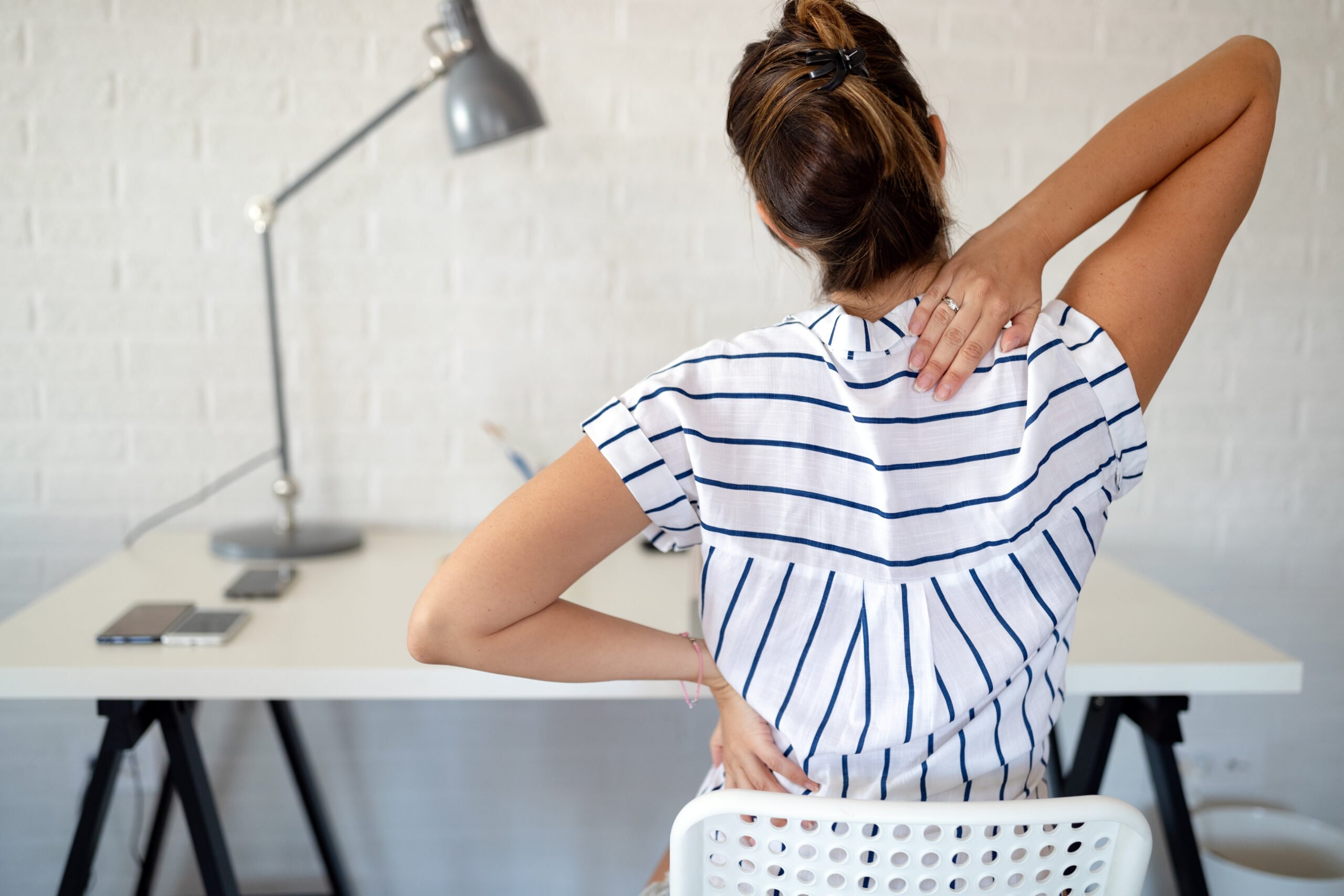
Most of us at some point in our lives will experience back pain to varying degrees, so much so, it is the largest cause of time off work here in the UK.
As we age we are more at risk of back problems however there are multiple factors which can contribute; being overweight, not exercising, poor manual handling techniques and mental health problems to name a few. Like with most things in health, prevention is better than cure and below we discuss ways to help minimise back problems and prevent recurrences.
You might just have a simple frustrating niggle, however for some, symptoms can be hugely debilitating causing reliance on pain medications and leading to long term physical and mental health problems.
Over 90% of lower back pain is referred to as “non-specific” as there is no obvious underlying cause however reassuringly of these around 90% of patients will make a full recovery within two weeks. Here we discuss the self-treatment advice which will help speed up recovery. There are times however where it can be more serious than a sprain and in this article we point out “the red flags” to look out for and when you should see us for a further review.
What are the symptoms of acute back pain?
The pain can be sudden or gradual in onset, often localised to a specific part of the back either side of the spine and can move down into the buttocks, hips or legs. This often occurs following an injury or strain. The pain can be sharp or pins and needle like pain moving down the back of the legs as far as the feet (what we refer to as sciatica).
You’ll find mobilising very difficult as the muscles in that area will be tight and stiff. It can be hard to stand fully upright or walk for long distances. You will have reduced range of movement which can make bending and twisting especially tricky and sometimes unbearable, and the muscles can go into spasm where you will feel a cramping in the back.
Resting and lying down tends to make the pain better however it’s important to not do this for a long period as this can exacerbate the stiffness.
There can be other symptoms aside from the pain which are very important to be aware of and which we touch on in the next section.
Generally, the pain subsides after a few days however if it is ongoing, it is important to get a full assessment and often the diagnosis is confirmed through examination. Occasionally further investigations are also needed such as an MRI scan or referral to a physio which we can help you with.
What are the most important things to look out for? (What we call Red Flags)
If these back symptoms are persistent after a few days, get worse or if you have any of the following symptoms do come and see us for a full assessment.
- Reduced power in the legs making walking difficult
- Reduced sensation (numbness) in the legs or buttock/genital region
- Pain down the back of both legs
- Loss of bladder control or any change in urination
- Loss of control of your bowel
- Sexual dysfunction
How should I initially manage back pain?
There are some very important first steps to make after the initial incident to help reduce the pain and inflammation of the back.
- Rest for the first few days but not complete bed rest so that you get more stiff. Carry out some gentle movements and short walks. Gentle stretching can ease the stiffness. Doing recommended exercises for as little as 5minutes every few hours can have a large impact on improving the recovery time. Do ask us for some recommended exercises.
- Inflammation is at its worst in the first 48 hours so to help reduce this apply ice packs for 15-20mins at least three times a day.
- After 48hours you can switch the ice for heat (a heating pad or hot water bottle). This acts to relax the tense muscles and improve the blood flow.
- Anti-inflammatories such as ibuprofen (Nurofen) reduce the inflammation and paracetamol can help with the pain. Taking these regularly can be very helpful and if stronger medications are needed then do let us know. Sometimes a muscle relaxant is recommended.
- Try to maintain good posture in order to avoid straining the muscles. A chair with lower back support can help or a rolled-up towel at your lower back should you not have another support.
- Sleeping in a neutral position is important. Try to sleep on your side with a pillow between your knees or on your back with a pillow under your knees.
- Avoid triggers such as heavy lifting or twisting.
After trying these for a few days, if you have no improvement in your symptoms do come to see us. Onwards referral to a physiotherapist, osteopath or chiropractor is often the case and we can help with this.
How can I help prevent back injuries?
There are many things we can do to reduce the risk of back injuries and this involves lifestyle changes, strengthening exercises and awareness of proper movement techniques. Here are some things to focus on: –
- Maintaining good posture:
- Standing: Avoid slouching.
- Sitting: A chair with good lumbar support. Feet flat on the floor with a footrest if needed. Avoid hunching over the computer.
- Driving: Adjust the seat so that your knees are slightly bent and back supported.
- Good Manual Handing Techniques: These techniques are crucial in the workplace and at home. Ensure you bend at the knees when lifting heavy objects, carry objects close to your body and avoid twisting.
- Strengthening your core muscles: This helps support your spine. Focus on your abdominal muscles with exercises like planks and crunches, your lower back muscles with movements such as bridges, and your hip muscles with lunges.
- Maintaining a healthy weight: Weight around the abdomen can put pressure on the spine and joints.
- Regular stretching: This improves flexibility and reduces the chances of strains. Most importantly focusing on the hamstrings and hip flexors, in addition to spinal stretches such as the cat-cow stretch.
- Stay active with regular exercise: This improves body strength and balance. Walking, swimming, yoga, Pilates.
- Avoid prolonged sitting: Sitting for long periods can weaken back muscles and put pressure on your spine. Try to take a break every hour to stand/walk/stretch.
- Supportive footwear: This helps maintain good alignment of the body.
- Good mattress: To help support your spine.
- Reduce stress: Stress can lead to muscle tension in the neck and back which can be relieved by activities such as meditation and yoga.
- Warm up before physical activity: Cold muscles are more prone to injury.
Normally, lower back pain can be easily treated if these simple steps are carried out in the first few days of it happening. However, if you have any concerns or any of the “red flag” symptoms then do come and see us early on. Focusing on building your core strength and the other recommendations will help reduce your chances of having back concerns in the future and you will be grateful for this!
To book an appointment online click here or call us on 0207 245 3999.
Article produced by Sloane Street Surgery, a private GP practice in London that provides world-class private healthcare for patients in Chelsea, Knightsbridge, Belgravia, West London, Hampshire, and beyond.
About the author
BSc (Hons) MBChB MRCGP
“Long consultation times allow us to really get to know our patients and treat them in a holistic fashion which ultimately helps us to give the best care”.
I’ve worked across a range of medical specialities including obstetrics and gynaecology, sexual health, care of the elderly and mental health.
Since 2019, I’ve spent time working as a Resident Medical Officer at King Edward VII Hospital but was keen to continue private practice work as a General Practitioner, joining Sloane Street in August 2022.
In addition to my private work at Sloane Street, I work for the NHS in South West London and continue to enjoy acute medicine, helping with pre-hospital care at events such as the London Marathon.